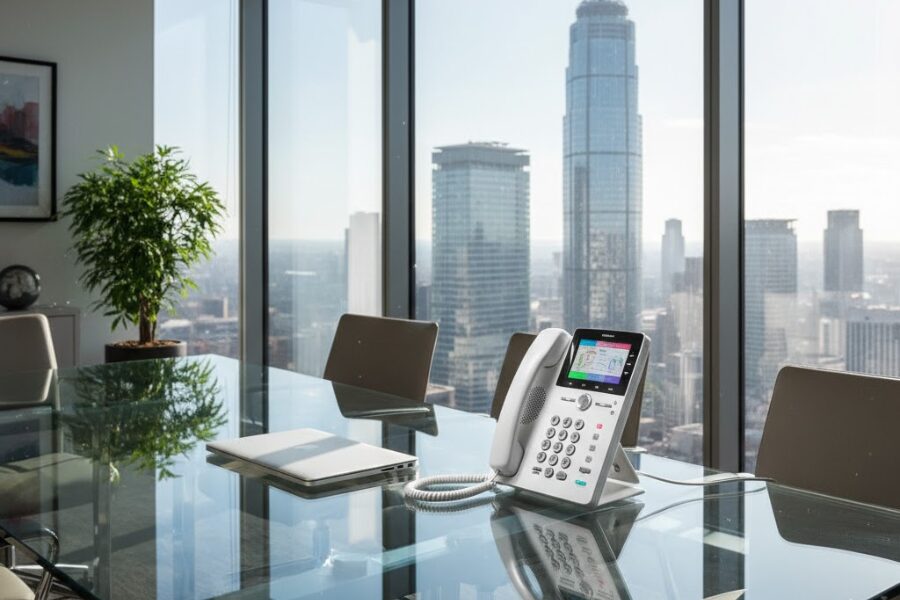
Telephone system installers London

Telephone system installers London

Trusted by over 40,000 + UK businesses

Telephone system installers London

Expert Telephone System Installers in London

Are you upgrading your office communication? A professional installation is key to unlocking the full potential of your new phone system. Our team of expert telephone system installers in London provides a seamless, efficient, and hassle-free setup for businesses across the capital.

With the UK’s 2025 digital switch-off fast approaching, migrating to a modern VoIP system is essential. Our certified engineers handle every aspect of the transition, from initial network assessment to final user training, ensuring your business experiences zero downtime.

Our London Installation Service Includes:

  • On-Site Network & Cabling Assessment: We ensure your office infrastructure is optimised for crystal-clear call quality.
  • Hardware & Software Configuration: Professional setup of desk phones, conference units, and softphone applications.
  • Seamless Number Porting: We manage the transfer of your existing 020 London number without any interruption.
  • Full Staff & Admin Training: We empower your team to use the new system’s powerful features from day one.
  • Ongoing Local Support: As a London-based team, we’re on hand for fast, reliable support when you need it most.

For a professional installation that guarantees performance, contact our London team today!

Area Information

A Tale of Two Populations: The Unique Demography of the City of London


The demography of the historic Square Mile cannot be understood with a single set of statistics. It is a story of a small, affluent residential community living alongside a vast, transient population of commuters who power its global economic engine.

Headline Statistics:

  • Resident Population (2021 Census): Approximately 8,600 people.
  • Daytime/Commuter Population (Pre-COVID Estimate): Over 600,000 people.

This means the area’s population increases by more than 70 times every weekday.


1. The Residential Population (~8,600 Residents)


The small group of people who call the City of London home live in a unique urban environment, often in modern luxury apartments or within historic estates like the Barbican.

  • Age Profile: The population is predominantly of working age. There are significantly fewer children and elderly residents compared to any other London borough. The demographic is skewed towards young professionals and established workers in the finance and legal sectors, often without dependent children.
  • Ethnic Diversity: While London as a whole is a “majority-minority” city, the residential population of the Square Mile is less diverse than the London average. According to the 2021 Census:
    • White: 68.3% (with 49.6% being White British)
    • Asian / Asian British: 17.5%
    • Mixed / Multiple Ethnic Groups: 5.7%
    • Black / Black British: 4.4%
    • Other Ethnic Groups: 4.1% This still represents a very international community, but with a higher proportion of White and White British residents than Greater London’s average.
  • Socio-Economic Profile: This is where the City’s population is most distinct. The residents are, on average, exceptionally affluent and highly educated.
    • Income: The area has one of the highest average household incomes in the entire UK.
    • Education: A very high percentage of residents hold degree-level qualifications or higher.
    • Occupation: The majority of working residents are employed in high-paying managerial, professional, and associate professional roles, primarily in finance, insurance, and law.
  • Household Composition: The area has a high proportion of single-person and two-person households. The number of households with children is extremely low, reflecting the age and professional focus of the residents.


2. The Daytime (Commuter) Population (~600,000+ People)


This is the population that defines the City’s global identity. Every weekday, a population equivalent to that of a major city like Glasgow or Manchester converges on the Square Mile to work.

  • Scale: The influx of over half a million professionals makes the City of London one of the most densely populated places on earth during business hours.
  • Characteristics: This population is highly skilled, highly educated, and incredibly international, drawn from all over London, the wider UK, and the rest of the world. It represents a global village of professionals in finance, law, technology, and business services.
  • Impact: This massive daily migration dictates the area’s entire infrastructure. The transport network (multiple Tube and train lines) is designed for this peak flow, and the local economy of pubs,
Telephone system installers London
History

The Roman Creation, Destruction, and Rebirth of London


Before the arrival of the Romans, the area that would become London was not a significant settlement. It was a landscape of marshy terrain, low gravel hills, and scattered streams feeding into the wide, tidal River Thames. The history of London as a city begins abruptly and deliberately with the Roman conquest of Britain.


1. A Strategic Creation (c. 47-50 AD)


Unlike older British cities such as Colchester or St Albans, London was an entirely Roman invention. Following their invasion in 43 AD, the Romans identified a strategic point on the north bank of the River Thames that was ideal for two key reasons:

  • It was the first point upstream from the sea that was narrow enough to construct a bridge, yet the river was still deep enough to allow sea-going ships to sail inland.
  • This location provided a perfect central hub for the new network of Roman roads being built to connect their military garrisons and other major towns across the province of Britannia.

Around 47 AD, Roman merchants, administrators, and engineers established a planned settlement here named Londinium. It was not initially a military fortress but a vibrant commercial town, designed from the outset for trade and administration. The first London Bridge, built from wood, was the key to its immediate success, turning the city into the most important transport and supply nexus in the new province.


2. Total Destruction: The Boudican Revolt (60-61 AD)


The fledgling city’s prosperity was brutally short-lived. In 60 AD, Boudica, queen of the Iceni tribe, led a catastrophic rebellion against Roman rule. The wealthy, largely undefended settlement of Londinium was a prime target.

The Roman historian Tacitus recorded that the city’s inhabitants fled as Boudica’s army approached. Those who remained were massacred without mercy, and the entire city was systematically looted and burned to the ground. The destruction was so absolute that archaeologists today can identify a thick red layer of burnt clay, ash, and debris beneath the modern City of London—a stark physical scar of this devastating event.


3. Rebirth and Golden Age (c. 70 AD – 2nd Century)


After crushing the revolt, the Romans rebuilt Londinium on a grander and more organised scale. Over the next century, it grew to become the most important city in Britannia. By around 100 AD, it had replaced Colchester as the provincial capital.

This was Londinium’s golden age, marked by the construction of monumental public buildings befitting its status:

  • The Forum and Basilica: At the heart of Roman London was its forum (a vast marketplace and public square) and basilica (a magnificent hall for law courts and administration). At its peak, this complex was the largest north of the Alps, a clear symbol of Londinium’s immense commercial and political power.
  • The Amphitheatre: Located near the modern-day Guildhall, a stone amphitheatre was built for public entertainment, which would have included gladiatorial contests, animal hunts, and public executions.
  • Temples and the Mithraeum: Citizens worshipped a mix of Roman and local deities. The most famous discovery from this period is the Temple of Mithras, a temple dedicated to a mysterious cult popular with Roman soldiers, which was unearthed in 1954 and is now a fascinating underground museum.


4. The London Wall and Late Roman Decline (c. 190 AD – 5th Century)


Around 200 AD, a massive defensive stone wall was constructed around the landward side of the city. The London Wall was a major feat of engineering, stretching for nearly two miles, standing about 20 feet high, and enclosing an area of approximately 330 acres. It was likely built in response to political instability and the threat of raids. This wall would define the physical boundaries of the City of London for over a thousand years, and impressive sections of it can still be seen today.

From the 3rd century onwards, Londinium began a slow decline. Economic instability across the Roman Empire, raids by Saxon pirates, and internal conflicts led to a shrinking population. Grand buildings fell into disrepair, and the city’s influence waned.


5. Abandonment and the “Saxon Hiatus”


When the Roman legions officially withdrew from Britain in 410 AD, Londinium was a shadow of its former self. The remaining Romano-British population eventually abandoned the walled city, and for several centuries, it became a largely empty ruin. The early Anglo-Saxons who settled in the region preferred not to live within the decaying Roman walls, establishing their own settlement, Lundenwic, about a mile to the west in the area of modern-day Aldwych and Covent Garden. The ancient Roman city became a ghost town, its mighty forum and basilica crumbling into the earth, awaiting rediscovery centuries later.


Telephone system installers London
Nearest

Nearest

Here they are, ranked by the nearest location to Central London:

London City Airport (LCY)

Distance: Approximately 7 miles (11 km) east of the City of London.

Summary: This is by far the closest airport to London’s main financial districts (Canary Wharf and the City of London). It is directly connected to the transport network via the Docklands Light Railway (DLR), making for a very quick journey into the city.

Heathrow Airport (LHR)

Distance: Approximately 14 miles (23 km) west of Central London.

Summary: London’s largest and busiest airport. It has excellent transport links, including the fast Heathrow Express train, the modern Elizabeth Line, and the London Underground’s Piccadilly Line, offering various options for speed and cost.

Gatwick Airport (LGW)

Distance: Approximately 30 miles (48 km) south of Central London.

Summary: The second-busiest airport in the UK. The Gatwick Express train provides a fast and direct link to Victoria Station in Central London. Other frequent train services are also available.

Luton Airport (LTN)

Distance: Approximately 29 miles (47 km) north of Central London.

Summary: A major hub for low-cost airlines. A shuttle bus connects the terminal to Luton Airport Parkway train station, from where frequent trains run to St Pancras International Station.

Stansted Airport (STN)

Distance: Approximately 40 miles (64 km) northeast of Central London.

Summary: Another major base for budget airlines. The Stansted Express train is the fastest and most direct way to get to Liverpool Street Station in the City of London.

Southend Airport (SEN)

Distance: Approximately 40 miles (64 km) east of Central London.

Summary: The furthest of London’s main airports. It has its own dedicated train station with regular services to Liverpool Street Station.

Telephone system installers London
Best Places

Best Places

Here are the best places to explore in old London.


1. Roman & Medieval London: The Ancient Square Mile


The true “old London” is the original walled city, a district now known as the City of London or “The Square Mile.” This is where London began as the Roman settlement of Londinium.

  • London Wall: The Romans built a defensive wall around Londinium nearly 2,000 years ago, and incredibly, you can still see large, impressive sections of it today. The best-preserved parts are near the Tower of London and the Museum of London. Walking alongside these ancient stones is the most direct connection to the city’s Roman origins.
  • Temple Church: A hidden gem tucked away in the quiet courtyards of the law courts. Built by the Knights Templar in the 12th century, its unique round design is modelled on the Church of the Holy Sepulchre in Jerusalem. Stepping inside feels like entering a different world, with stone effigies of knights on the floor.
  • Guildhall Art Gallery & Roman Amphitheatre: This is a fantastic two-for-one experience. After viewing the art gallery, descend into the basement to stand in the remains of London’s Roman Amphitheatre. The outline of the arena is marked on the floor, and you can imagine the gladiatorial contests that once took place on the very spot where you stand.
  • St. Paul’s Cathedral: While the current magnificent structure was designed by Sir Christopher Wren after the Great Fire of 1666, this site has been home to a cathedral for over 1,400 years. It is the spiritual heart of the old city.
    • Don’t Miss: Climbing the dome. The journey up offers incredible views from the Whispering Gallery and the Golden Gallery at the very top, giving you a stunning perspective over the ancient and modern city.


2. Tudor & Elizabethan London: Palaces, Plots, and Plays


This era of Shakespeare, royal intrigue, and maritime exploration is best experienced along the River Thames.

  • The Tower of London: The single most important historical site in London. It’s not one tower, but a full-blown medieval fortress. It has served as a royal palace, a formidable prison, and the site of famous executions (like two of Henry VIII’s wives).
    • Don’t Miss: The Crown Jewels are breathtaking, but the best part of a visit is taking a tour with a Yeoman Warder (a “Beefeater”). They are fantastic storytellers who bring the Tower’s bloody and brilliant history to life.
  • Shakespeare’s Globe: Located on the South Bank, this is a stunningly faithful reconstruction of the original open-air playhouse where many of Shakespeare’s plays were first performed.
    • Don’t Miss: Seeing a play here is an unforgettable experience. For the most authentic (and cheapest) ticket, stand in the yard as a “groundling,” just as audiences did 400 years ago.
  • Southwark Cathedral: London’s oldest Gothic church, dating back to 1106. It was the local parish church for William Shakespeare and is mentioned in the diaries of Samuel Pepys. It’s a beautiful, peaceful sanctuary that has witnessed centuries of history on the south bank of the Thames.


3. Victorian & Dickensian London: Hidden Alleyways and Grand Markets


To feel the atmosphere of 19th-century London, you need to dive into its hidden passageways and grand commercial halls.

  • Leadenhall Market: A breathtakingly beautiful Victorian covered market in the heart of the City. With its ornate glass roof and cobbled floors, it feels like you’ve stepped straight into a Dickens novel. It was also famously used as Diagon Alley in the Harry Potter films.
  • Fleet Street & Its Hidden Courts: Once the heart of London’s newspaper industry, Fleet Street is riddled with narrow, gas-lit alleyways and hidden courtyards.
    • Don’t Miss: Ducking into Ye Olde Cheshire Cheese, one of London’s oldest pubs. Rebuilt after the Great Fire, this labyrinthine pub with its dark wood panels and sawdust floors was a regular haunt for literary figures like Charles Dickens and Sir Arthur Conan Doyle.
  • Westminster Abbey: While its history stretches back over a thousand years, the Abbey is the grand embodiment of the British state and monarchy, which reached its zenith in the Victorian era. It is the site of every coronation since 1066 and is the final resting place of countless kings, queens, poets, and scientists.
    • Don’t Miss: Poet’s Corner, where you can pay respects to literary giants, and try to attend the Evensong service. Hearing the choir in this magnificent setting is a sublime experience, free of charge.

Reliable Business Telephone system installers London

Work with Connect in Cloud

Partner with one of the UK’s leading business phone system providers and enjoy exceptional customer service, unbeatable value, and reliable local support — all in one place.

Cheap VoIP Phones UK

Installation, Support and Hosting

All our phone systems are installed by our expert team, hosted securely in the cloud (via Amazon EC2 or OVH Cloud), and supported by our in-house engineers for complete peace of mind.

VOIP cordless phone in London

Choice of Yealink Colour IP Handsets

Every great phone system deserves the perfect handsets and apps — that’s why Connect in Cloud offers the complete range of Yealink desk and DECT phones for any business setup.

Choose from over 20 handset models, or take advantage of our desktop and mobile apps compatible with PC, laptop, iPhone, and Android devices.

Buy voip phone in London

Apps for Desktop, Android, iOS & Web

Every Connect in Cloud phone system includes easy-to-use applications that work seamlessly across all your devices — so your team can start calling and collaborating instantly.

Portable voip phone in London

The UK’s Best Choice of Headsets

Connect in Cloud proudly operates The Headset Center — the UK’s leading online supplier of professional business headsets. Trusted by over 44,000 UK businesses, we deliver quality, reliability, and unbeatable value.

VoIP provider Birmingham

Dashboards, Wallboards, Reports & Analytics

Stay in control of your business performance with real-time dashboards that track calls, queues, and agent activity — accessible from any device, anywhere. Get live updates, notifications, and detailed analytics to make smarter decisions faster.

Wireless IP phone in London

Audio & Video Conferencing

Enjoy fully integrated HD audio and video conferencing with your Connect in Cloud phone system — included at no extra cost. Perfect for virtual meetings, sales presentations, and online training, with no time limits or restrictions.

wifi voip phone in London
ip phones for home UK

Simple, Scalable & Cost-Effective Business Telephone Systems

At Connect in Cloud, we provide powerful cloud-hosted telephone systems that deliver all the features of a traditional phone setup — without the high installation or maintenance costs.

Our systems are fully hosted in the cloud, reducing the risk of downtime and giving your team the flexibility to work seamlessly from the office, home, or on the go.

Whether you operate from a single site or manage multiple locations, our business phone solutions keep your team connected anytime, anywhere, and on any device — empowering your business to stay agile, efficient, and ready for growth.

Book Your Service For Telephone system installers London

Fast response and 24/7 support!

Integrate Your Business Tools Seamlessly

At Connect in Cloud, our small business telephone systems are built for effortless integration with the tools you already use. Out of the box, they connect with leading platforms such as Salesforce, Microsoft Dynamics, HubSpot, SugarCRM, Zendesk, Bullhorn, Pipedrive, and many more — with new integrations added regularly.

We also support less common web-based CRMs, providing click-to-dial and screen pop functionality for a smoother workflow. Plus, with native Microsoft Teams integration, you can enjoy a reliable, cost-effective telephony solution that fits perfectly within your existing Microsoft environment.

IP desk phone in London
Portable voip phone in London

Empowering Businesses with AI-Driven Cloud Communication Solutions

At Connect in Cloud, we blend cutting-edge telecom technology with the power of artificial intelligence to make communication faster, smarter, and more reliable. Our cloud-based systems help teams stay productive, secure, and connected — from anywhere.

Trusted as the top provider of Business Telephone Systems in Atherstone

We deliver the essential technology your business depends on

No matter what challenges your business faces, we make communication simpler, more dependable, and completely hassle-free.

Our team takes the time to understand how your people work, then provides clear, practical solutions designed around your needs. From phones and broadband to more advanced systems, we’ll keep your operations running seamlessly and your team connected.

Upgrade Your Business Phone System

Experience our advanced business telephone systems designed for seamless app and CRM integration — with built-in analytics to keep your team connected and informed. Enjoy unlimited calling, HD video meetings, voicemail, and full Microsoft Teams integration, all from just £10 per month.

Improve Business internet Speeds

Connect in Cloud delivers high-speed fibre internet solutions designed to keep your business running at peak performance — with faster speeds, minimal downtime, and enhanced productivity for your entire team.

Fast, Reliable Managed Business WiFi

At Connect in Cloud, we deliver enterprise-grade Unifi Business WiFi solutions that provide exceptional performance, reliability, and coverage. Our expert team designs, installs, and manages wireless networks for businesses across the UK — even in the most demanding environments.

Experts in Business Mobile & Wireless Data

Switch to Connect in Cloud and get more from your business mobile solutions. Explore a wide range of mobile plans, devices, and data services, with competitive quotes from major UK networks — including EE, O2, Vodafone, and Three.

FAQs

Finding Telephone System Installers in London


Choosing and installing a new telephone system is a crucial step for any London business. Finding the right installer is key to a smooth transition and a reliable service. Here are answers to common questions.


1. What types of telephone systems do professional installers in London typically set up?


Most professional installers in London specialise in modern VoIP (Voice over Internet Protocol) systems, which are replacing traditional landlines. The main options are:

  • Cloud-Hosted VoIP Systems: The most popular choice. The system is managed by a provider in the cloud, offering maximum flexibility and scalability. Installers will set up the handsets, configure the software, and ensure your network is optimised.
  • On-Premise VoIP Systems: For businesses that want more direct control. Installers will physically set up the PBX server hardware in your office, connect the phones, and configure the entire system.

They will also manage the migration away from older ISDN/PSTN lines, which are being switched off in the UK by 2025.


2. Why should I hire a professional installer instead of setting it up myself?


While some “plug-and-play” systems exist, a professional installer provides critical value:

  • Network Optimisation: They will assess your office’s internet and network infrastructure to guarantee high-quality, jitter-free calls.
  • Correct Configuration: They ensure all features—like auto-attendants, call routing, and voicemail-to-email—are set up correctly to match your business workflow.
  • Hardware Setup: Professional installation of desk phones, headsets, and conference equipment saves you time and hassle.
  • Staff Training: Installers will provide essential training for your team, ensuring everyone knows how to use the new system’s features effectively from day one.
  • Ongoing Support: Using an installer gives you a single point of contact for any future issues, which is invaluable in a fast-paced business environment.


3. Can an installer help me keep my existing 020 London phone number?


Yes, absolutely. This is a standard and critical part of the installation process. A professional installer will manage the “porting” of your existing 0207, 0208, or 0203 number from your old provider to the new system, ensuring a seamless transition with no downtime.


4. What does the installation process typically involve?


A professional installation follows a clear process:

  1. Consultation & Survey: The installer discusses your business needs and may conduct a site survey (physical or remote) to check your network and wiring.
  2. System Design & Configuration: They design the call flow and pre-configure the system and handsets off-site.
  3. On-Site Installation: An engineer visits your London office to physically install the phones, connect them to the network, and perform final tests.
  4. User & Admin Training: They train your staff on how to use their new phones and show administrators how to manage the system.
  5. Go-Live & Support: They oversee the final switch-over and provide ongoing support.


5. How long does a typical installation take?


The timeframe can vary. For a small London office (e.g., 5-10 users), the on-site installation can often be completed in half a day to a full day. Larger or more complex installations with new cabling requirements may take longer. Most of the configuration is done beforehand to minimise disruption to your business.


6. What is the typical cost for installation in London?


Installation costs are usually a one-off fee. In London, this can range from a few hundred pounds for a small, simple setup to several thousand for a large, complex office installation. The cost depends on:

  • The number of users/handsets.
  • The complexity of the required features (e.g., call centre setup).
  • Whether new network cabling is required.
  • The level of on-site training needed.

Always ask for a detailed, itemised quote that separates installation fees from hardware and monthly subscription costs.


7. Why is using a London-based installer an advantage?


While many providers are national, a London-based installer offers key benefits:

  • Fast On-Site Support: If there’s a physical issue, an engineer can get to your office quickly, which is a major advantage in the capital.
  • Local Knowledge: They understand the specific connectivity challenges and options available across different London boroughs.
  • Face-to-Face Relationship: Building a relationship with a local team can lead to better, more personalised long-term support.

We enable your business to do more! Call us on 0203 146 2222

By clicking the button above, you consent to receiving calls and emails from Connect in Cloud. Calls may be connected using automated technology. Privacy Notice