
People are always talking to each other in stores these days. These small interactions, such as asking questions from store to store, quickly checking in with headquarters, or asking about stock at the last minute during busy holiday hours, all affect how customers feel about the store. Even though a lot has changed in the digital world in the last ten years, there is still a big problem: most retailers still don’t know how their stores really talk to each other.
Without connected retail communication, slowdowns go unnoticed, decisions take longer, and IT departments have to deal with problems. To close this gap, retail leaders are shifting their focus from just moving to the cloud to getting full visibility.
The Visibility Gap: Why Moving to the Cloud Wasn’t Enough
Only 34% of retailers say they have reached or gone beyond their goals for digital transformation. This is mostly because different groups usually make progress on their own instead of following plans that work together. Moving to the cloud updated old hardware and made it cheaper to maintain, but it didn’t change how associates and back-office teams worked together right away.
Many IT leaders now know that they have newer systems and more channels, but they still don’t know how information moves around. The technology isn’t “broken”; it just doesn’t work well with connected retail communication.
You can see the effect: 49% of retailers with more than one location say that broken systems make it harder to make decisions and hurt the customer experience. There is friction, but it’s not because there aren’t enough tools; it’s because the tools don’t work together.
Why Visibility Should Be Your Top Strategic Goal
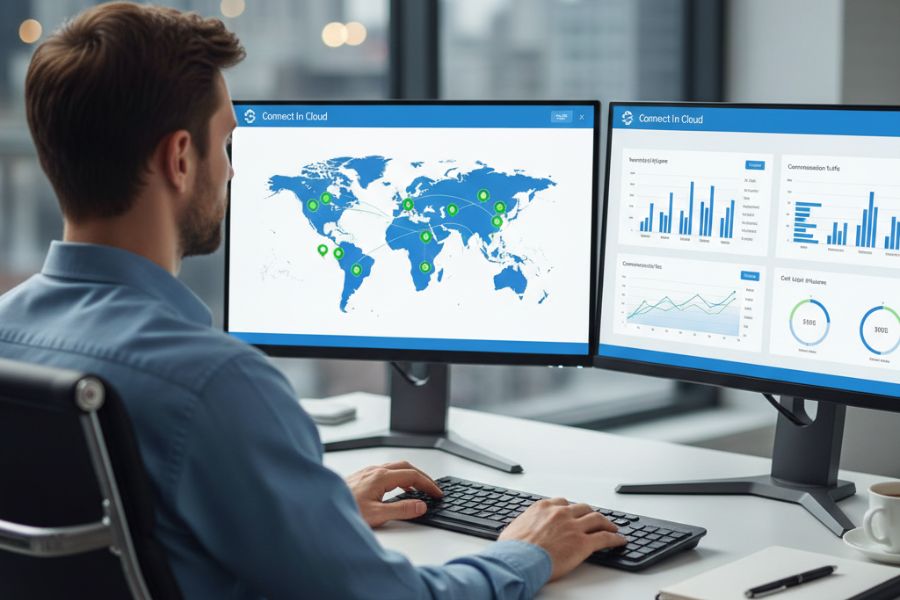
The people in charge of today’s retail technology strategy don’t want to have to do another “heavy lift” or roll out a new platform that causes a lot of problems. They need to be able to clearly see the times that have an impact on how well the store does. They need to know where communication breaks down and where stores need help before a problem gets to the customer.
Putting more apps on an associate’s handheld device doesn’t really help them do their job better. It comes from putting connected retail communication into action so that all of the branches and departments at headquarters are on the same page.
What Connected Retail Communication Looks Like in the Real World
Retailers who are really seeing a difference aren’t rebuilding everything from the ground up. Instead, they are updating things in stages to make things clear quickly. Connect In Cloud can help with this change in the following ways:
1. First, put all the communication together
Think about how hard it is to run a lot of places. Without a single platform, management is a nightmare and call quality is all over the place. By choosing Connect In Cloud, retailers can make management easier and give their teams the visibility they need.
Starting with communication is a smart move. This is the part that has the biggest impact on how things work every day. When stores and HQ use the same platform, the “noise” from broken systems goes down, patterns start to show up, and IT can see what’s going on right away without stopping current workflows.
2. Getting useful information from conversations
Many big companies lose sight of things as their legacy systems get older. This makes it nearly impossible to see how field teams interact with customers. Retailers can see everything that happens with Connect In Cloud, like:
-
The number of calls and the times when they are busiest.
-
Average times for getting back to people.
-
Things that happen over and over at the store level, like trends and problems.
You can see all of your daily interactions when all of your connected retail communication is in one place. Retailers can find out which stores are too busy or need more training before the customer experience gets worse.
3. Growing without the drama
In the past, scaling meant weeks of setting things up by hand and on-site. Connect In Cloud fixes this problem. It only takes a few days or even hours to open new stores when there is centralised management and zero-touch provisioning.
A central admin console makes it easier to deal with seasonal spikes than having to frantically look for resources. This level of efficiency lets IT teams focus on the big picture instead of always fixing problems.
4. Working as a single team
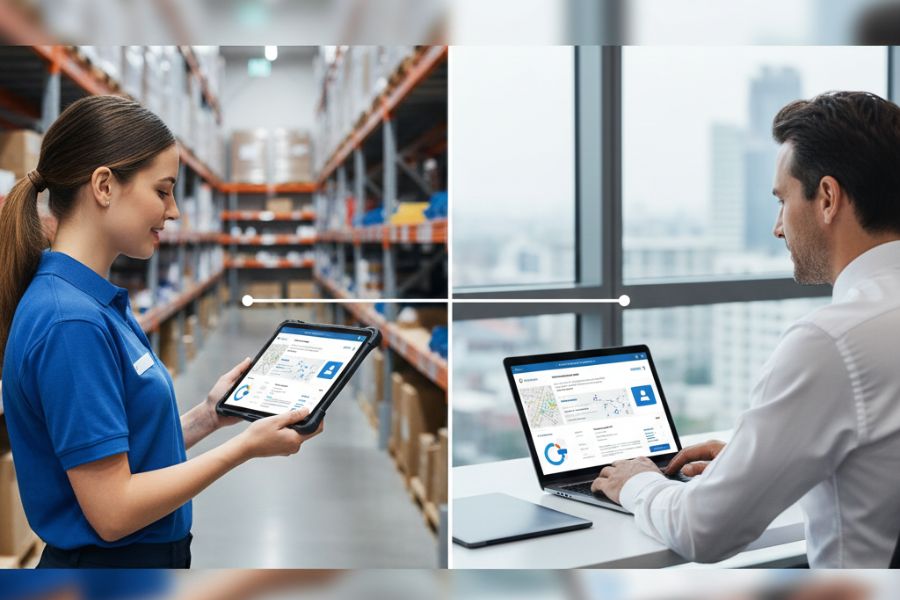
The people are the last part of connected retail communication. It’s easy to plan things when stores and the back office talk to each other through one system.
-
Store workers can quickly get in touch with the right people.
-
Managers get answers right away.
-
HQ can send policy changes to all locations at the same time.
The result is a retail network that acts like one living thing, where communication keeps things going instead of slowing them down.
The Competitive Advantage of Connection
In a market with low profits and high customer expectations, connected retail communication is becoming a key way to stay ahead of the competition. When retailers work with Connect In Cloud, they get the following benefits:
-
Clarity: To be able to see what’s going on in every place.
-
Agility: Being able to deal with changes in the market without affecting how things work.
-
Trust: To help things grow quickly without making them harder.
You don’t have to start over from the beginning. You only need to connect what’s already there, one layer at a time. Connect In Cloud makes it easier than ever to see how to make a retail space that works well with everything else.